
There are examples in Europe that do not make much noise. They do not appear as major national reforms or as flagship actions. They do not always begin in ministries. They are not accompanied by grand announcements and promises.
And yet, through time, continuity and persistence, they manage to make a real contribution to the economic and social transformation of a region.
One such example is Valnalón in Asturias, in northern Spain.
Asturias, like Western Macedonia, is a region with a strong industrial and mining history. It is a region that had to face a difficult question: what happens when an old production model declines or completes its historical cycle?
In the case of Valnalón, the answer was not simply to create training programmes or yet another business-hosting structure with a temporary lifespan.
It was the creation of a long-term local mechanism for entrepreneurial culture, support for new ideas and connection between education and the real economy of the region.

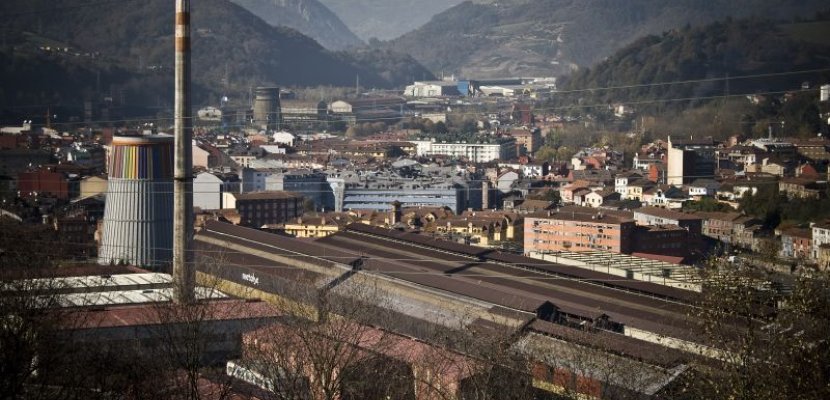
Valnalón was created in 1987, in a place with a strong industrial past, in La Felguera, Langreo. It did not begin as an abstract idea. It began from a place and from people who needed to rethink their role after industrial restructuring. The organisation’s own official presentation describes Valnalón as “a place for entrepreneurship since 1987” and as a mechanism that helps people analyse the viability of their business idea.
This is the first critical lesson.
Transition does not need money alone.
It needs well-designed institutions.
It needs meaningful structures close to the people who genuinely need them.
It needs mechanisms that remain, learn, adapt and build trust.
Valnalón did not operate as a centrally designed policy that was simply handed down from the top. It is a public body of the regional government of Asturias, deeply rooted in a specific territory, with a specific industrial memory, specific social needs and a specific development challenge.
And this matters a great deal.
Because one thing is a central support system that designs and implements general actions within a standard framework defined by a funding instrument. It is quite another to have a local or regional mechanism implemented by people who live in the area, know the place in depth, understand its people, schools, young people, small businesses, organisations, strengths and weaknesses.
Over the years, Valnalón developed an approach that is not limited to entrepreneurship as a simple technical skill. It does not merely teach someone how to prepare a business plan or how to receive support in the process of setting up a business.
It builds entrepreneurial culture.
- From an early stage.
- In school.
- In vocational education and training.
- In youth.
- For the person who has a promising idea but does not know how to test it or mature it.
- For the unemployed person who needs meaningful support before trying to start a business.
- For the small team that wants to turn a community need into a service, a product or a social enterprise.
Since 1993, Valnalón has developed the “Cadena de Formación para Emprender”, a training chain for entrepreneurship, with two main directions: entrepreneurial education at different levels of the education system and the promotion / support of the creation, development and consolidation of businesses. Valnalón Educa describes this chain as a response to a very specific need: the lack of entrepreneurial culture and attitude in a region shaped by the industrial era and by a tradition of dependence on large employers and public structures.
Here lies a second lesson for Western Macedonia.
Changing a production model does not happen only through available funding.
It does not even happen only through support infrastructures, even large-scale ones.
It does not happen only through the development of photovoltaic parks, energy storage, new hydrogen technologies or academic research.
It also happens by changing people’s relationship with the idea of initiative and entrepreneurship.
By enabling them to think, test, cooperate, fail on a small scale and try again. By turning entrepreneurship from a solitary adventure into a supported pathway.
Valnalón has important and measurable results.
The Semillero de Proyectos, Valnalón’s “project seedbed”, has been operating since 1992 and supports people who want to analyse the viability of their business idea. By 31/12/2024, according to the organisation’s own data, it had advised 6,947 entrepreneurs, supported the development of 3,295 projects and contributed to the creation of 967 businesses.
These numbers are not just statistics. They show duration and continuity. They show that when a mechanism does not stop every time a programme, programming period or administration changes, it begins to produce real results.
In Western Macedonia, since 2020, we have been discussing resources a great deal – indeed, many available resources through the Just Transition Programme.
Less so real mechanisms.
We talk a lot about calls for funding, but much less about meaningful and in-depth support.
We talk a lot about absorption of funds, but less about transformation.
And here is perhaps the most useful element of Valnalón.
It is not simply a “good practice” identified through European projects for the exchange of experience and applied policies for the Just Transition.
It is a reminder that regions undergoing change need local mechanisms of continuity, mainly based on local human capacities.
Not only projects.
Not only studies.
Not only occasional activity or training because funding is available.
But structures that work steadily on entrepreneurial culture, social innovation, the connection of young people with real needs and the transformation of ideas into viable initiatives.
So what is often missing in Western Macedonia?
- Stable support after funding has been approved.
- Meaningful practical assistance for organisations that have a good idea but do not yet have sufficient organisational capacity.
- The connection of social needs with entrepreneurial and cooperative schemes.
- The daily, persistent, methodical work that helps a region gain self-confidence.
For several years now, Western Macedonia has been at a point where the social economy and social innovation can play a more substantial role.
There is already an active call under the “Western Macedonia 2021-2027” Programme to support existing and new Social and Solidarity Economy enterprises, with the aim of promoting the SSE and strengthening employment. The action provides for public expenditure of EUR 2 million, the possibility of overbooking, 100% grant support and an eligible budget of up to EUR 65,000 per investment plan.
This is important, but it is not enough. Because the critical question is not only how many projects will be approved.

The critical question is whether these projects will last.
- Whether they will create jobs.
- Whether they will take root in local communities.
- Whether they will respond to real needs.
- Whether they will become small nuclei of social and productive reconstruction.
This is where a real connection and transfer of know-how from the SIJMA project can emerge.
SIJMA brings to Western Macedonia meaningful experiences from other European regions facing similar transition challenges, with support models that were set up and operated with genuine involvement and governance from the local and regional environment. Valnalón, as a good practice from Asturias, cannot and should not be copied mechanically. There is neither the available time nor a substantive reason simply to transfer a Spanish support model to our region.
What is valuable is to transfer its logical framework.
- The logic of long-term support.
- The logic of shaping entrepreneurial culture from an early stage.
- The logic of a local mechanism rather than fragmented central intervention, with structures often guided by people who are not located in the region or, even when they are, operate mainly in terms of economies of scale and formal synergies. In this way, even good intentions and scientifically grounded approaches are weakened.
- The logic of practical assistance to people, teams and organisations trying to turn an idea into a viable activity.

In this context, a pilot project in Western Macedonia could function not as yet another general information and implementation action, but as a parallel support mechanism for the social economy projects that will be approved and begin in 2027.
- With proper and meaningful mentoring.
- With support during implementation.
- With real connection to local stakeholders.
- With assessment of social impact.
- With evidence on what works and what does not.
- With the aim of making financial support more effective in practice.
Obviously, Western Macedonia does not need to discover everything from scratch. But it does need, finally, to choose carefully what it should learn from other European regions facing similar problems of industrial transition.
Valnalón shows us that regions with industrial memory can rebuild perspective when they invest methodically not only in infrastructure, but also in people.
Not only in money, but also in capacities.
Not only in programmes, but also in local institutions.
Not only in central decisions, but also in local mechanisms that know the region and work persistently within it.
If there is one thing we should retain from Asturias, it is this:
Transition is not the matter of a single call under a programme.
It is the matter of an entire generation and of a region that is shrinking significantly and at great speed.
That is why it requires implementation with duration, by capable organisations and through mechanisms that can remain alongside people when the real work begins.
This is also the most difficult discussion for Western Macedonia: how we move from the fragmented activation of resources to mechanisms that generate lasting change, local self-confidence and real social value.
Kostas Karamarkos

Strategic Planning Consultant
Co-founder of JTIG
SIJMA Project Manager
Sources – References:
https://www.interregeurope.eu/sijma